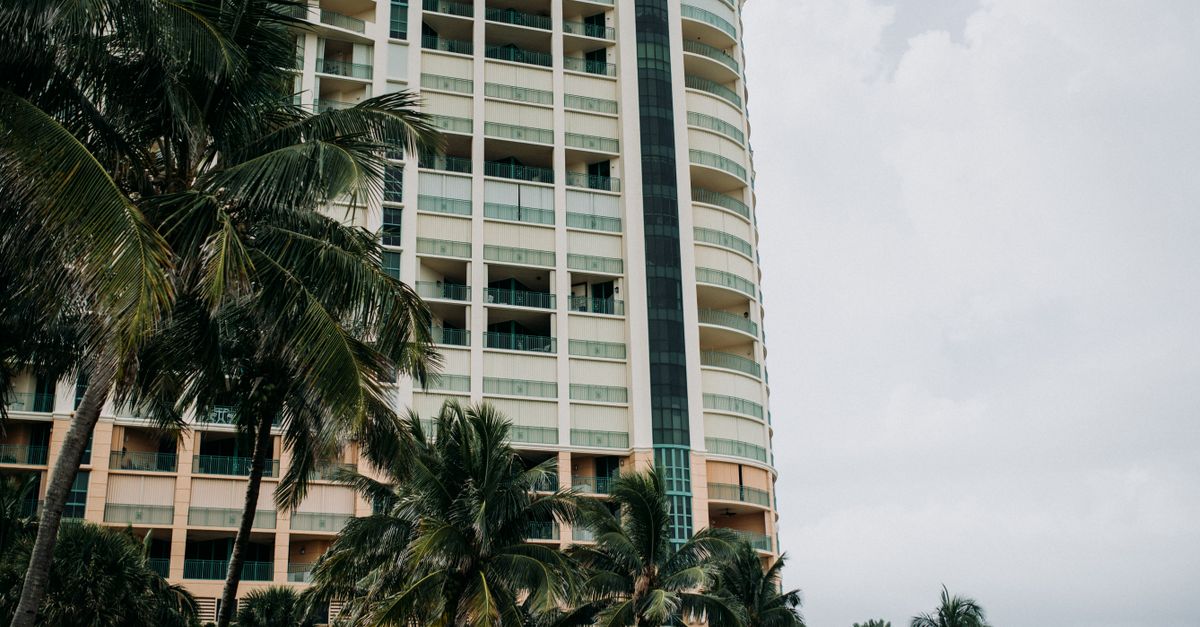
Amelia Island condos are not one development or one association. The phrase covers condominium communities across the island with different boards, budgets, dues and rules. Florida requires structural integrity reserve studies and milestone inspections for covered buildings three or more habitable stories tall, with important exceptions for some small buildings. Both can reach your dues.
That is the part no photograph shows.
You can tour two buildings on the same afternoon, a mile apart, with the same ocean filling the same windows, and be looking at two very different financial positions.
One has the roof and the walkways funded. The other has a vote coming.
What are Amelia Island condos?
Amelia Island condos are a category, and a wide one, covering separately governed communities across the island.
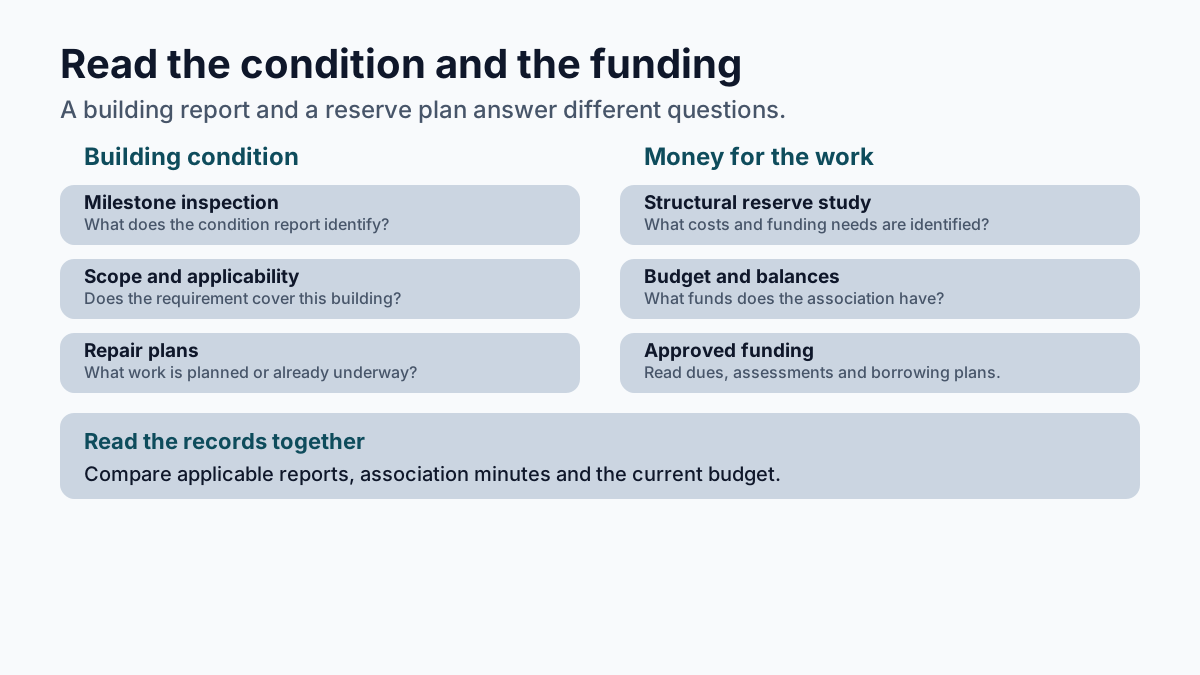
Start by finding which association governs the building, which documents apply and how its budget works. Some associations govern more than one condominium, so do not assume one building means one board or one reserve account.
Amelia Island Plantation shows how layered that can get.
It runs on a master association that represents everyone who owns property inside it and is built out of 33 separate condo, home, villa and property-owner sub-associations.
That master association bills one assessment a year, due March 1, covering community security and the upkeep of roads, roadsides, dunes, lagoons, lighting and the common property it owns.
Those shared assets include two community centers, multiple parks and beach access points, along with the roads, trails, bridges and security gates that tie them together.
Your own building's dues sit on top of all of that.
The Plantation also collects a Contribution to Reserves fee on every resale, equal to 0.5% of the sale price, paid by the purchaser.
On a $700,000 resale that is $3,500 owed by the buyer, separate from the building's dues and separate from the building's reserves.
What does Florida require of a condo building three stories and up?
For covered condo buildings three or more habitable stories tall, Florida uses two different clocks: a milestone structural inspection and a structural integrity reserve study.
The milestone inspection looks for substantial structural deterioration. It is the report to read when a tour tells you more about the finishes than the structure.
A milestone structural inspection is required for residential condominium and cooperative buildings three or more habitable stories in height once the building turns 30, or 25 where the local jurisdiction requires it, and it repeats every 10 years after that. Its purpose is to determine whether substantial structural deterioration is present. There are exemptions, including single-, two-, three- and four-family dwellings with three or fewer habitable stories above ground; ask the local building official which rule applies to the property.
The structural integrity reserve study is the money side. Florida law requires one at least every 10 years for covered buildings three habitable stories or higher. The same small-dwelling exception matters here, and portions outside the association’s maintenance responsibility can be excluded.
The association’s funding plan should provide money when the identified work comes due. Funding may involve regular or special assessments or qualifying borrowing; the statute also allows limited alternatives and temporary pauses. Ask which plan the association actually adopted and how it reaches your dues.
Three habitable stories is a lower bar than most buyers picture.
A three-story villa may fall within an exception that a tower does not. The number of dwellings and the building’s legal structure matter alongside its height.
What does a reserve study change for a condo buyer?
A reserve study makes a building's condition legible before you own it.
Without reading the reserve records, a buyer can meet an underfunded building later in a letter announcing a special assessment.
The study names components, estimates costs and sets out a funding schedule. Read it beside the budget and any vote on how to fund the work.
Sometimes that means higher monthly dues. Read that as information, not as a warning.
Dues attached to a written reserve plan are a building telling you what it costs to keep standing in this climate.
Low dues with nothing behind them are a bill you have not been handed yet.
So ask early, while you still have room to walk away.
- The milestone inspection report, if the building is old enough to owe one.
- The reserve study, and the funding schedule that came out of it.
- The current reserve balance measured against what the study says it should be.
- The last two years of board minutes and budgets.
- Any assessment already voted, and any repair already scheduled.
A good agent has those documents in your hands during the inspection period rather than after it, and reads them with you.
Does the flood insurance discount reach every building on Amelia Island?
Not automatically, and this one is worth checking by address.
Fernandina Beach reports a Class 5 rating in FEMA’s Community Rating System and more than 10 years in the program. Ask the insurance agent to confirm the discount that applies to the building’s NFIP policy before counting it into your costs.
That rating belongs to the city.
A building outside the city limits is not carried by it, so confirm which jurisdiction a building actually sits in before you count the discount into your numbers.
Then ask where the discount lands, because a condo's flood coverage may sit in the association's master policy rather than on a page with your name on it.
What do Nassau County's August home sales numbers show?
Nassau County's median single-family price was $456,207 in August, a 0.7% increase from July, with closed sales up 28.1% to 114.
The county carried 392 active listings that month, a 3.4-month supply, with a median 45 days on the market.
Those figures track single-family homes rather than condominiums, so read them as the weather over the market and not as the price of any one building.
Kim Knapp, the 2026 president of the Northeast Florida Association of REALTORS, reads the regional shift the same way: "More inventory is changing the conversation in Northeast Florida. Buyers have greater choice and the ability to be more selective, while sellers may need additional patience and flexibility."
What if your second home becomes your full-time home?
Buy the building you would still want on the day part-time becomes permanent. A condo is often bought as a part-time place and then quietly promoted.
Jim and I bought a second home here in 2020, expecting it to become full time about five years later. We sold the Atlanta house and moved within the year.
Plans move faster than buildings do.
So weigh the building you would still want on the day part-time becomes permanent, which means reading the association's paperwork with more attention than you give the finishes.
Some condos are chosen for the view off the balcony.
The ones worth owning are chosen for what stands behind the walls and the money set aside to keep it there.
If you are comparing buildings on the island, I am happy to pull the association documents on the ones you are considering and walk through what they say about the next ten years, well before you are reading them under contract.
Frequently asked questions
What documents should I ask for before buying a condo on Amelia Island?
Ask for the milestone inspection report if the building is old enough to owe one, the structural integrity reserve study and the funding schedule that came from it, the current reserve balance, the last two years of budgets and board minutes, and any assessment already voted. Request them during the inspection period, while you can still act on what they say.
Does every condominium building need a structural integrity reserve study?
Florida generally requires a structural integrity reserve study at least every 10 years for covered condominium buildings three or more habitable stories tall. Exceptions include single-, two-, three- and four-family dwellings with three or fewer habitable stories above ground. Confirm the building’s classification and the association’s responsibilities rather than rely on height alone.
How can a buyer spot a special assessment before it arrives?
Read the last two years of board minutes and budgets alongside the reserve study, then compare the current reserve balance with what the study says the building should be holding. A gap between those two numbers is the thing to ask the board about in writing.
What fees come with an Amelia Island condo beyond the building's dues?
Inside Amelia Island Plantation, the master association bills one assessment a year, due March 1, for community security and the roads, dunes, lagoons, lighting and common property it maintains, and your own building's dues sit on top of that. The Plantation also collects a Contribution to Reserves fee on every resale, equal to 0.5% of the sale price and paid by the purchaser, which comes to $3,500 on a $700,000 sale. Every other community sets its own dues and rules, so ask what applies to the building you are considering.
Where should you start when buying a condo on Amelia Island?
Start with the building and the associations that govern it: their documents, boards, budgets and reserves. One association can govern multiple buildings, and similar ocean views can come with very different financial positions. The paperwork tells you what you are buying into.
Sources reviewed
- Florida DBPR — Condominium Milestone Inspections
- Florida DBPR — Condominium FAQs (SIRS)
- Florida Statutes §718.112(2)(g)
- NEFAR — August 2026 Northeast Florida market report
- NEFAR — August 2026 Northeast Florida market report (Kim Knapp quote)
- Amelia Island Plantation Community Association — Need to Knows
- Amelia Island Plantation Community Association — Need to Knows
- City of Fernandina Beach — Flood Protection
- City of Fernandina Beach — Flood Protection
- NFIP condominium master-policy appeal decision
- Angie Heitzer official profile and approved public-experience ledger