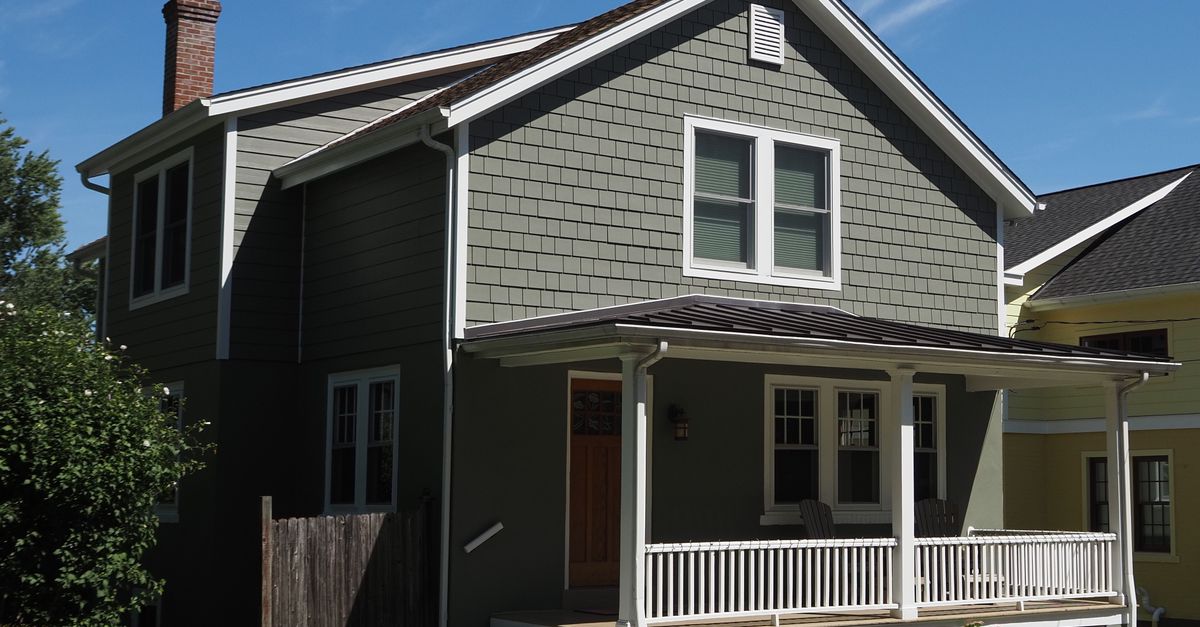
Amelia Island foreclosures run through Florida's judicial process: a lender files suit, wins a judgment of foreclosure, and the clerk of court conducts the sale. That takes time. It's also happening more often. Florida recorded the highest state foreclosure rate in the country through the first half of 2026, and the Jacksonville metro area this island sits inside ranked among the ten worst.
Now the part the listing photos never show.
Picture a house that has been closed up since April with the air handler switched off. A musty closet or corrosion on the slider hardware would deserve investigation. You need an inspection to find out what happened while it sat.
A foreclosure is a financial event that happened to a loan. What you're buying is a building whose maintenance and occupancy history still need checking.
How do Amelia Island real estate foreclosures work?
Florida forecloses in court. The statute requires a judge to enter a judgment of foreclosure and order the clerk of court to conduct the sale, which is why every one of these properties carries a case number long before it has a sale date.
For covered loans, federal servicing rules generally prohibit the first foreclosure filing until the loan is more than 120 days delinquent. Exceptions include due-on-sale violations and a servicer joining another lienholder's foreclosure.
After that, the calendar does most of the work.
- The case is a lawsuit, and the borrower can raise defenses in it.
- The owner, or a lienholder sitting behind the first mortgage, can cure the debt and stop the sale before the later of the clerk filing the certificate of sale or the time specified in the foreclosure judgment, by making the payment the law requires.
- After that, the statute is blunt. There is no right of redemption.
A sale date can change. The redemption deadline depends on the certificate of sale and the judgment, so have counsel confirm the dates in the specific case.
What do the 2026 foreclosure numbers say?
227,548 U.S. properties had foreclosure filings in the first six months of 2026, up 21 percent from the same period a year earlier. Florida accounted for 27,494 of them, which works out to 0.27 percent of the state's housing units and a 32.65 percent increase year over year, the highest rate of any state. The Jacksonville metro came in at 0.31 percent, among the ten worst major metros in the country.
Rob Barber, ATTOM's CEO, read the first half of 2026 as "a continued normalization of the foreclosure process," while noting the increases "suggest that some homeowners may be facing greater financial strain than they were a year ago."
Those are state and metro figures. They tell you which way the water is moving, not how deep it is at any one address. Nassau County is a small slice of a large metro, and where you're shopping on the island changes the arithmetic enough that it deserves its own conversation.
Are short sales more common than foreclosures?
No, short sales are rising, but foreclosure is still the more common ending for an owner in difficulty. In a short sale, the lender agrees to let the home sell for less than the balance owed.
They're coming back. U.S. short-sale transactions rose about 16 percent year over year in the first quarter of 2026. They're still rare. Fewer than 30,000 took place in the U.S. in 2025, roughly 0.6 percent of all typical home sales and 28 percent of distressed sales.
What changed this year is the pricing. Since January 2026, short sales have been selling at a smaller discount than foreclosures, the first time that's been true since tracking began in 2018.
Realtor.com's economist attributed part of the gap to the time homeowners may remain in a property during foreclosure, citing a national average of 592 days. That is an analyst's explanation, not a promise about any borrower's timeline or payment obligations.
For a buyer, the check is simple: don't assume every foreclosure filing represents a home available to buy.
What is the discount actually paying for?
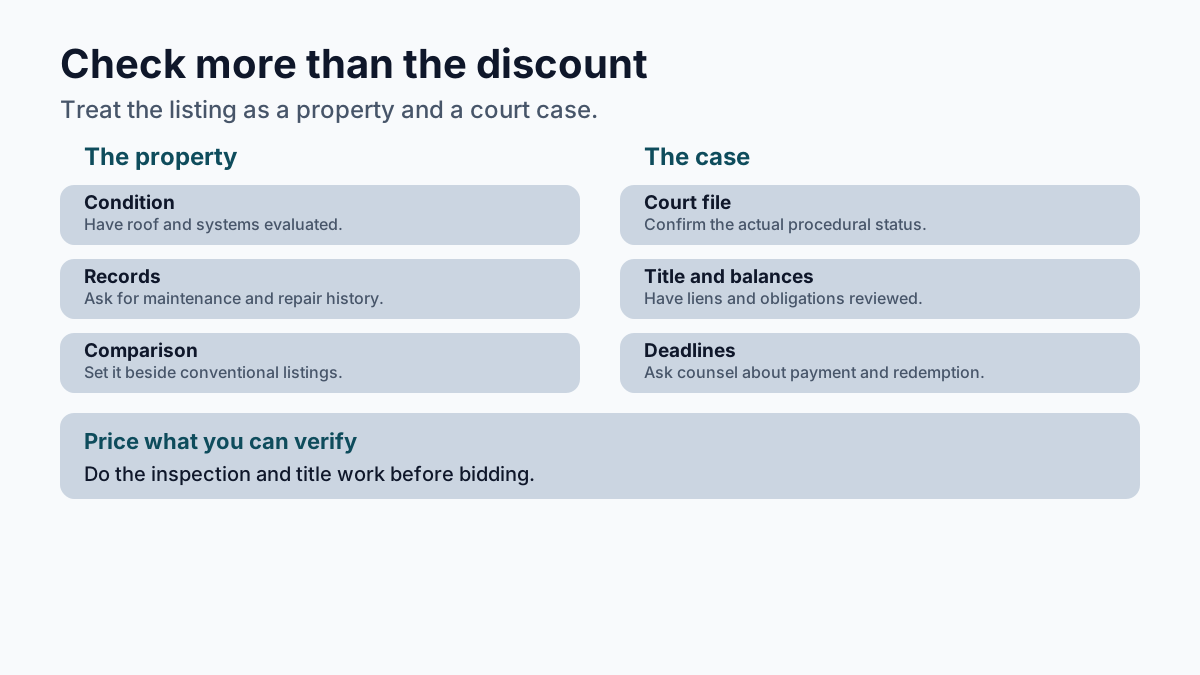
Price the condition and title questions: roof and system history, any association balances, and liens identified in the case. When I prepare a seller, the review starts with the homes competing for a buyer right now, then roof age and documentation, HVAC, water heater, electrical, plumbing, and whatever deferred maintenance is visible, and only after that do we talk about carpet and paint. Reading a distressed listing works in the same order.
Ask what the roof is and when it went on, and whether there's paperwork for it. A roof around twenty years old calls for a documented plan rather than a shrug, and that plan belongs in your number before you bid.
Then keep going.
- Have condensers and exterior hardware checked for corrosion, and ask for service records.
- Check for moisture damage or mold around drywall and baseboards; a musty smell warrants investigation.
- On a condo, ask what the association is owed and whether a special assessment is pending. That answer belongs in your number too.
- A judicial foreclosure is a lawsuit, so who was served and which other liens sat in the case are facts with consequences. Have them checked by someone whose job that is.
None of this argues against buying a distressed home. It argues for pricing the condition honestly and setting it beside the conventional listings it's competing with, which is the same work any purchase takes, and more of it.
What should you do if you're behind on your mortgage payments?
You still have options, and a short sale is one worth handing to a professional before the bank forces your hand. Have counsel review the deadlines in your actual case.
For covered loans, the federal rule generally requires more than 120 days of delinquency before the first foreclosure filing, with exceptions. Once filed, a judicial foreclosure is a lawsuit the borrower may defend. Florida's redemption deadline is the later of the certificate of sale filing or the time specified in the judgment; have counsel confirm the required payment and deadline.
Realtor.com's analysis says owners in difficulty have more options than in previous decades. Ask a lender how a short sale or foreclosure would affect your eligibility for a future mortgage before relying on a general waiting-period comparison.
A short sale needs a buyer, a price the lender will accept, and someone willing to move paperwork through an institution that keeps its own pace. That's work worth handing to a professional while you still have a choice.
A discount is something you collect once, at closing. A location is something you collect every morning for as long as you own the place.
If you're weighing a distressed listing against a conventional one here, I'd be happy to help you compare what each would truly cost to own, and what each would be like to live in.
Frequently asked questions
Is it a bad idea to purchase a foreclosed home?
No, but it's a different transaction from a conventional purchase, because you're pricing condition and title risk on a property that may have sat unconditioned for months. The direction reversed this year: since January 2026, short sales have sold at [a smaller discount than foreclosures](https://www.prnewswire.com/news-releases/short-sales-are-making-a-comeback-302826708.html), so the foreclosure is now the deeper discount of the two, the first time since tracking began in 2018. Have the roof, the major systems and the liens priced before you bid rather than after.
Are there a lot of foreclosures in Florida now?
[ATTOM reported](https://www.prnewswire.com/news-releases/foreclosure-activity-posts-annual-increase-in-first-half-of-2026-302827085.html) that Florida had 27,494 properties with foreclosure filings in the first half of 2026, which is 0.27 percent of its housing units and the highest rate of any state, up 32.65 percent year over year. The Jacksonville metro area that Amelia Island sits inside came in at 0.31 percent, among the ten worst major metros in the country.
How do you get a list of foreclosures in your area?
A Florida foreclosure is a court case, so the record starts in the county court file rather than on a listing portal, and only some of those properties ever become homes a buyer can tour and finance. A licensed local agent can cross the court calendar against what is genuinely available and tell you which ones are worth your time.
Is Amelia Island real estate a good investment?
I'd treat it as a lifestyle decision before a financial one. A discount is something you collect once, at closing, while a location is something you collect every morning for as long as you own the place. Price the condition honestly, set the home beside the conventional listings it's competing with, and buy the one you'd want to live in.
Sources reviewed
- Fla. Stat. § 45.0315 — Right of redemption; deficiency judgment (2024 Statutes, The Florida Senate)
- Fla. Stat. ch. 702 — Foreclosure of Mortgages and Statutory Liens (2023 Statutes, The Florida Senate)
- "How does foreclosure work?" — Consumer Financial Protection Bureau
- 12 CFR § 1024.41 — Loss mitigation procedures (Regulation X), Consumer Financial Protection Bureau
- ATTOM, "Foreclosure Activity Posts Annual Increase in First Half of 2026" (PR Newswire, July 16, 2026)
- Realtor.com (Move, Inc.), "Short Sales Are Making a Comeback" (PR Newswire, July 16, 2026) — quoting Glen Morgenstern, economist intern
- City Visitors: Greater Jacksonville
- KeyCrew interview with Angie Heitzer — her own account and professional advice