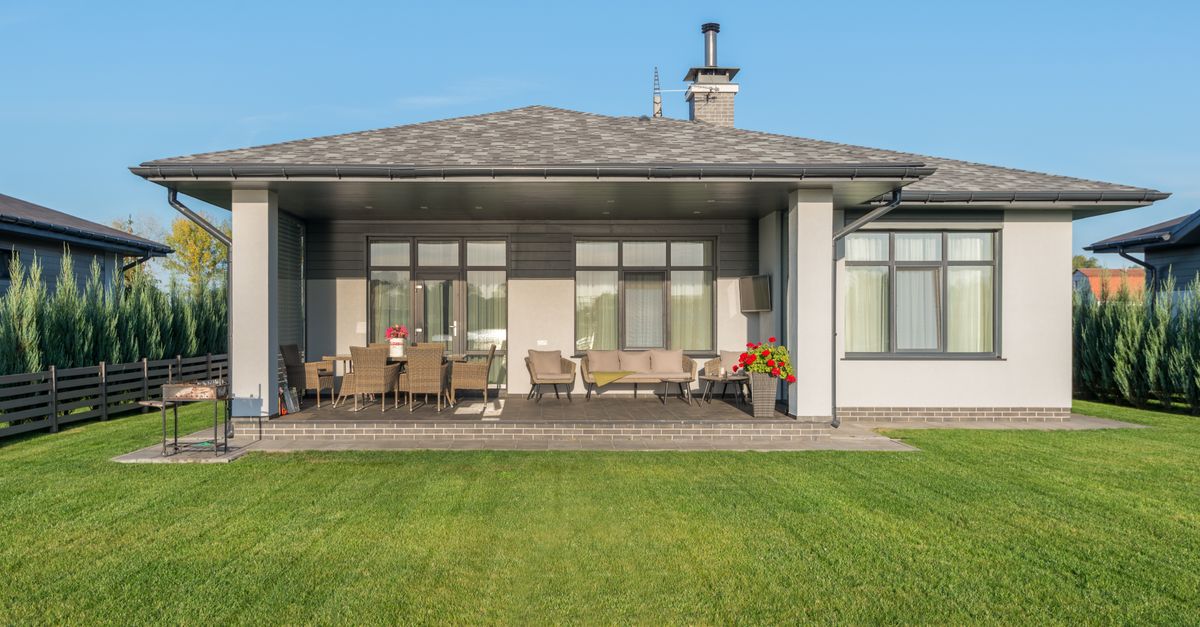
Buy the older home when location, lot, and character matter more than predictability. Buy new construction when you want current code, fewer first-year repairs, and wind features you can document for your insurer. Price doesn't settle the question anymore. National new-home medians have recently run below existing-home medians, but those figures describe different mixes of homes. For your own purchase, compare the specific houses and the risks you'd rather manage.
Picture two houses you could tour in one afternoon here.
A 1948 cottage six blocks off Centre Street, live oaks over the street, heart pine floors, a roof that was replaced at some point nobody can name.
A three-year-old build across the Intracoastal in Yulee, a warranty folder to read, a lawn with four young trees staked against the wind.
Same budget. Completely different next five years.
Is new construction cheaper than an older home?
In the national median figures, new homes have recently priced below existing homes. Historically, those medians ran the other way. That does not tell you which of two local houses is the better value.
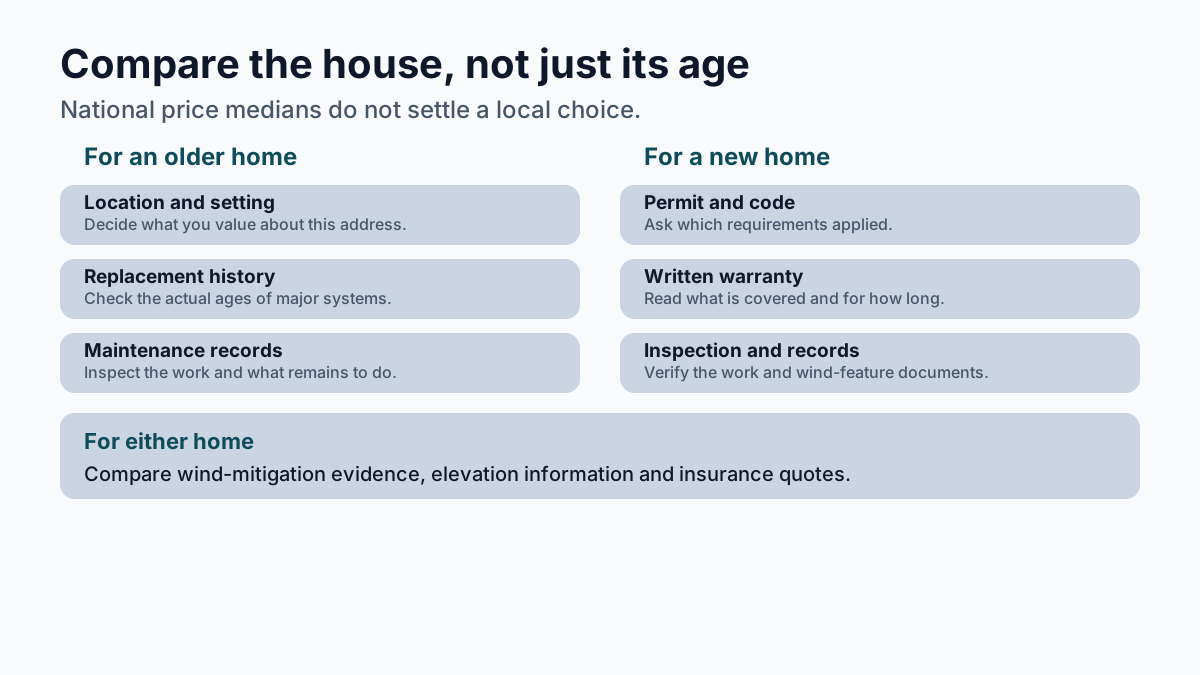
The national numbers no longer say that.
New houses sold in July 2026 came in at a national median sales price of $392,200 in the Census Bureau's revised figure published with its August report.
Existing homes sold in August 2026 came in at a median price across all housing types of $429,100, up 1.6 percent from $422,400 a year earlier.
Research published by the National Association of Home Builders found the same pattern in the quarterly data. In the second quarter of 2026, the national median new-home price of $410,700 ran $25,000 below the national median existing-home price of $435,700, and existing-home prices have run above new-home prices in six of the past nine quarters since that relationship reversed in the second quarter of 2024.
One caution before you carry that into a local decision.
These national medians mix locations and home sizes, and the new-home series covers new single-family homes while the existing-home figure here covers all housing types. They can't tell you what a particular lot two blocks from the water is worth.
What are the downsides of buying an older home on the coast?
An older home's downsides come down to upkeep in salt air and whether anyone kept the records that earn insurance credits. Salt air is patient.
Salt mist can accelerate corrosion on metal connectors and fasteners. Inspect the exposed hardware instead of judging it by the home's age.
So the age question here comes down to upkeep. What did the last owner stay ahead of, and what did they postpone?
Five things worth pricing before your inspection period ends:
- the roof's age, shape, and how it's attached
- the outdoor HVAC unit and how exposed it sits
- the windows, and whatever protects the openings in a storm
- the electrical panel, water heater, and supply plumbing
- where water goes after an August downpour
None of that argues against an older house. It argues for shopping with the paperwork in hand.
Florida law requires residential property insurance rate filings to carry actuarially reasonable discounts for construction features shown to reduce windstorm losses, including roof shape, roof-to-wall connections, and opening protection.
An older home can earn those credits.
Ask the insurer what inspection and documentation it needs to verify the features that qualify.
That's the moment the two houses separate. Suppose you open a hall closet and the folder is there, the roof permit and the wind mitigation report from the replacement. That folder follows the house into your insurance quote. Now suppose it isn't, which is where the 1948 cottage started: a roof nobody can date, and an inspection or documentation question to resolve before you count on a credit.
What are the benefits of buying new construction?
New construction buys you predictability, mostly.
- ask which code applied to the permit
- request the wind-feature documentation
- read the warranty, if one is offered
- inspect the work and price any repairs before closing
What it can't hand you overnight is mature landscaping. An established street may already have the canopy you want; a newly planted lot may take years to grow into its setting.
With a completed spec home, you're also buying a floor plan somebody else chose. That's fixable over time. The location isn't.
Is the market giving buyers room to compare?
Buyers have more room to compare old against new than they've had in a while.
Existing-home inventory grew to a 4.9-month supply in August 2026, its highest level in over ten years.
NAR chief economist Lawrence Yun attributed that month's mild dip in buying activity to high mortgage rates, pointing out that mortgage rates and home sales move in opposite directions.
For someone weighing old against new, more resale inventory means more chances to find the older home that was genuinely maintained, rather than the one that only photographs well.
Which two documents should you ask for before you buy?
Two documents settle most of the argument: the wind mitigation report, and the home's elevation relative to base flood elevation. Ask for both, on either kind of house.
The first is the wind mitigation report, which records features such as roof shape, roof-to-wall connections, and opening protection. Ask the insurer which report and supporting documents it will accept before counting on a discount.
The second is elevation. Base flood elevation is the water-surface height associated with the flood that has a 1 percent chance of being reached or exceeded in any given year.
For new construction in a flood hazard area, ask the local building department for the required elevation. Florida requirements can include height above the base flood elevation, called freeboard; the correct requirement depends on the site and applicable rules.
For an older downtown house, check the actual elevation and permit history rather than guessing from its age.
Find out which house you're standing in before you're emotionally committed, and request an insurance quote for that address.
So should you buy an older home or new construction?
Buy the older home when the location is the one you'd still want in ten years; buy new when you'd rather have a warranty and weekends that belong to you. Answer these in order.
- Which location would you still want in ten years?
- What does each house actually quote at for insurance?
- How much of your own time are you willing to give upkeep in the first five years?
- What would it cost to make each one what you want?
The location question goes first because it's the only one you can't revisit later.
If the answer is a block in town with the oaks and a short walk to dinner, buy the older house, and buy it with the roof, the elevation, and the wind report in front of you.
If the answer is a quiet lot, a warranty, and weekends that belong to you, buy new, and be honest with yourself that you're waiting on the landscape.
If you're comparing a cottage in town against a new build across the Intracoastal, I'm glad to help you look past the finishes at what each one will ask of you after closing.
An older home hands you a setting that's already grown in, plus a list of what comes next.
A new one hands you a clean list and asks you to wait on the trees.
Frequently asked questions
What are the downsides of buying an older home?
Check the age and condition of the roof, HVAC, and water heater rather than assuming they match the house's age. Ask the insurer what inspection and supporting documents it needs to verify eligible wind-mitigation credits.
Is $400,000 enough to build a house?
As a benchmark for a finished new home, it sits close to the national middle. The revised national median sales price of new houses sold in July 2026 was $392,200. That is a home sale price, not a construction-only budget. A build's own cost depends on the land, the plan, and the site, so price the lot and the house separately before assuming the number carries.
What decreases property value the most?
There isn't one universal biggest factor. Price the condition of major systems, investigate work done without permits, and compare flood information and insurance quotes for the actual address before deciding what to offer.
Does new construction have to be built above base flood elevation?
New construction in a flood hazard area must meet the applicable elevation requirements, which can include freeboard above base flood elevation. Ask the local building department for the requirement on the specific site. For an older house, check its actual elevation and obtain an insurance quote rather than guessing from its age.
Sources reviewed
- Census/HUD August2026 release, revisedJulyprice
- National Association of Realtors — Existing-Home Sales report, August 2026
- National Association of Realtors — Existing-Home Sales report, August 2026 (Lawrence Yun statement)
- National Association of Realtors — Existing-Home Sales report, August 2026 (inventory)
- NAHB Eye on Housing — "New vs. Existing Home Prices: What the National Median Misses" (Sept. 4, 2026)
- NAHB Eye on Housing — "New vs. Existing Home Prices: What the National Median Misses" (Sept. 4, 2026)
- Florida Statutes § 627.0629 — Rate filings for residential property insurance; windstorm mitigation discounts
- USGS baseflood elevation definition