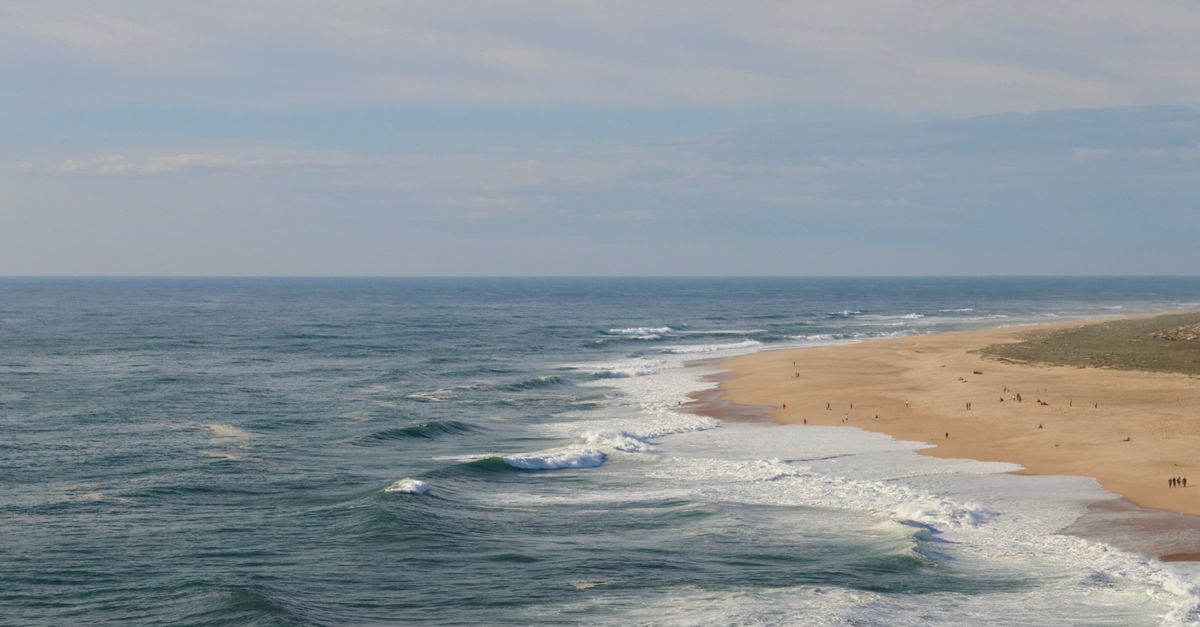
Amelia Island's beaches are a single continuous Atlantic shoreline of roughly 13 miles, divided among four managers: Fort Clinch State Park at the north end, the City of Fernandina Beach's 41 public beach accesses, five Nassau County beachfront parks, and Amelia Island State Park at the southern tip. All of it is public. Fees, hours, and rules change with the manager.
That division is what catches people. You can be standing on sand where a leashed dog is required and an open fire is illegal from May through October, walk north for twenty minutes, and cross into a state park that charges at the gate and closes at sunset. Same water, same sand, a different rulebook. Once you know where the seams fall, the shoreline stops feeling like one long guess.
Who manages the beaches on Amelia Island?
Four managers share the sand: Florida State Parks at both tips (Fort Clinch to the north, Amelia Island State Park to the south), the City of Fernandina Beach inside city limits, and Nassau County south of the city line. Each sets its own fees, hours, and rules, and the table below marks the detail on each stretch that most people miss.
| Stretch | Managed by | The detail most people miss |
|---|---|---|
| Northern tip | Florida State Parks, at Fort Clinch | There is a gate fee, and touring the fort itself costs extra |
| City limits | City of Fernandina Beach | 41 accesses, 39 of them numbered, and only 22 have parking |
| South of the city line | Nassau County | Driving on the sand is open only to county residents, property owners, military and placard holders |
| Southern tip | Florida State Parks, at Amelia Island State Park | A daily headcount cap, and horses allowed on the beach |
None of this is posted on one map at one trailhead, which is why two people can give you flatly contradictory answers about the same island. Both may be right about their own stretch.
What is the beach like at Fort Clinch State Park?
The beach at Fort Clinch State Park is the least developed on the island, backed by dunes and park land rather than by houses, with a brick fort standing at the island's northern point. The park takes its name from that fort, a Third System masonry fortification whose construction began in 1847. It became one of Florida's first state parks in 1935, and the Civilian Conservation Corps began restoring the buildings the following year.
Plan around the gate. The park runs 8 a.m. to sunset every day, and entry is $6 per vehicle carrying two to eight people, $4 for a single-occupant vehicle, and $2 per pedestrian or cyclist. Going inside the fort is a separate $2.50 per person. Camping runs $26 a night plus a $6.70 reservation fee and a $7 nightly utility fee.
That sunset closing is the practical constraint. A sunrise walk here is easy. An evening bonfire is not a thing that happens at Fort Clinch.
Where can you ride a horse on the beach in Florida?
Amelia Island State Park is the only state park in Florida where visitors ride horses directly on the sand, and it protects more than 200 acres at the island's southern end. Entry is $2 per person, and the hours match Fort Clinch at 8 a.m. to sunset.
The cap is the number to plan around. Beach access there is limited to 300 people at a time and 600 across a full day. That is a hard ceiling, not a guideline, and it is the reason the south tip stays quiet on a weekend when the middle of the island does not.
How many of the public beach accesses in Fernandina Beach have parking?
Of the 41 public beach accesses the City of Fernandina Beach lists within city limits, 22 have parking in an adjacent lot and 19 do not. Thirty-nine of the 41 are numbered. Do that arithmetic and you get the truth of a summer Saturday here: nearly half the ways onto the beach are neighborhood walkovers with nowhere to leave a car.
Four locations are ADA accessible: North Beach Park, Main Beach at Dolphin Street, Seaside Park, and the Matanzas access. Main Beach is the one visitors find first, with parking, restrooms, and food within walking distance, and it behaves accordingly in July.
All city accesses close from midnight to 5 a.m. So the beach is not a 24-hour place inside city limits, whatever your plans for the meteor shower.
If you are weighing a beachside address, that parking arithmetic shapes the day more than the view from the listing photos, and I am happy to walk through which accesses serve which streets.
What are the rules on the Nassau County beaches?
At Nassau County's five beachfront parks outside the city, dogs must be leashed at all times, open fires are banned from May 1 through October 31, and beach driving is limited to county residents, county property owners, active-duty military, and placard holders. Those parks are Burney Park, Peters Point Park, Scott Road, the Southend Walkover, and the Summer Beach Walkover. The county rules are stricter than most visitors expect.
Dogs must be leashed at all times. Not voice-controlled, not off-leash before nine. Leashed, with a civil citation of up to $100 behind the rule. Open fires are banned from May 1 through October 31, the whole warm half of the year, because that window is sea turtle nesting season.
Driving on the beach is legal here, which surprises people who assume Florida ended that practice everywhere. It is also not open to everyone. The county sells no visitor pass and no day permit. Driving is limited to Nassau County residents, county property owners, active-duty military, and drivers with a disability placard, each proven with identification at the access, and that restriction covers every county ramp on the island rather than American Beach alone. Eligible drivers still need four-wheel drive, all-wheel drive, or a vehicle meeting the county's beach buggy definition, and the overnight hours tighten seasonally: no vehicles on the sand from 7:30 p.m. to 7:30 a.m. between May 1 and November 1, and from 9 p.m. to 7 a.m. between November 1 and April 30. The county's summary page ends that first window a day earlier, on October 31, but the ordinance itself says November 1, so treat November 1 as a 7:30 night. Two-wheel drive gets stuck.
Can you swim at Amelia Island beaches?
Yes, you can swim here: these are open Atlantic swimming beaches, and the posted restrictions govern vehicles, dogs, fires, exterior lighting, and hours rather than the water. The only blanket time limit inside the city is that midnight to 5 a.m. closure of the accesses.
On the sand itself: this is Atlantic quartz sand, firm and tan, packed hard enough that the county permits four-wheel-drive traffic on it. Anyone arriving with the bright white powder of Florida's Gulf coast in mind is picturing a different geology. What you get instead is a broad, walkable, bikeable beach at low tide.
Width is not fixed, either. A 2025 shore-protection project placed more than 190,000 cubic yards of sand from East 2nd Street south past Sadler Road, running from mobilization on April 25 through demobilization by August 18. Renourishment is how this coast keeps its beach in front of its seawalls, and it recurs. If you are buying near the dune line, treat it as a permanent feature of the neighborhood rather than a one-time project.
When is sea turtle nesting season on Amelia Island?
Sea turtle nesting season runs May 1 through October 31, and loggerhead, green, and leatherback turtles all nest on this shoreline. During the season the city requires long-wavelength amber or red exterior lighting near the beach, shielded and aimed downward, so that hatchlings orient toward the ocean instead of toward a porch.
The season is not a formality. Amelia Island Sea Turtle Watch volunteers logged 215 nests along 11.5 monitored miles by July 1, 2026, passing 200 nests before the end of June for only the second time in the group's twelve years of compiled records. Roughly 150 volunteers patrol, and 13 certified handlers hold the permits required to mark a nest or touch a turtle, an egg, or a hatchling.
"It's rare that that happens," said Ronda Bokram, president of Amelia Island Sea Turtle Watch, of the early pace in that July 2026 report. "It's a really exciting year, actually." Bill Bokram, the group's nesting-data coordinator, put the norm in context: "The average for the 11 years at the end of June would probably be about 130."
For a homeowner near the dune line, the lighting rule belongs on the same list as the roof age and the HVAC records. It is a code obligation with a season attached, and it is easier to solve with fixture choices at purchase than with a complaint letter in July.
What is American Beach?
American Beach is a historic oceanfront community toward the island's south end, founded in 1935 as a resort for the executives, shareholders, and community members of the Afro-American Life Insurance Company. A.L. Lewis, of that company, purchased 33 acres of oceanfront on Amelia Island that year and founded it at a time when very few beaches in the Southeast admitted Black vacationers. The holdings eventually reached 216 acres, and the shoreline there carries a piece of national history.
The American Beach Historic District was listed on the National Register of Historic Places on January 28, 2002, reference number 01001532, with periods of significance spanning 1925 to 1949 and 1950 to 1974. In November 2024 the National Park Service opened a study evaluating American Beach for National Historic Landmark designation, expected to run through spring 2026, following a 45-day public comment period and a public meeting on November 16, 2024.
"American Beach was the most prominent of Florida's segregated beaches and played a significant role in providing travel and leisure opportunities to African Americans traveling to the region during the mid-twentieth century," said Alesha Cerny, regional historian with the National Park Service National Historic Landmarks Program, in the announcement of that study.
That history is part of the ground you are walking on.
What is the nicest part of Amelia Island?
The nicest part of Amelia Island is the stretch that fits your plans: Main Beach for parking, restrooms, and lunch, Fort Clinch for a campsite and a fort, the south tip for horses and quiet, and a city walkover without parking for solitude. Sort by what you actually want out of the afternoon.
- Parking, restrooms, and lunch nearby: Main Beach at Dolphin Street.
- A campsite and a nineteenth-century fort in the same trip: Fort Clinch.
- Horses on the sand: Amelia Island State Park, and get there early against the 300-person cap.
- Driving onto the beach with a cooler and chairs: the county-managed stretches, and only if you are a county resident, a county property owner, active-duty military, or a placard holder. Four-wheel drive, and off the sand before 7:30 p.m. in summer.
- Quiet: one of the city walkovers without parking, which you reach on foot or by bike.
There is a pattern in that list. On this island, quiet is a function of parking. Every stretch that stays empty stays empty because getting there requires either a car you cannot park, a gate fee, or legs.
What should you know before buying a home near the beach?
A beach you visit and a beach you live beside are different assets, and the difference is mostly in the details nobody photographs. My husband Jim and I bought a second home here in 2020 expecting to move full time about five years later. We were living in Fernandina Beach full time within a year.
So when a beachside listing catches you, check the unglamorous things. Which numbered access is closest, and does it have parking. Whether the exterior fixtures meet the turtle lighting standard, or will need replacing before your first May here. Whether the county's driving and fire rules apply to your stretch or the city's do. Whether "steps to the beach" is a distance you can measure or a phrase somebody typed.
None of that shows up in a photograph, and all of it shows up in a Tuesday. If you are comparing addresses along this shoreline, I would be glad to help you sort which stretch, and which set of rules, actually fits the way you want to live.
Love Where You Live.
Frequently asked questions
What is the most beautiful beach on Amelia Island?
There is no single answer, because the shoreline changes character end to end. The least developed stretch sits inside Fort Clinch State Park at the north end, backed by dunes and park land instead of houses, while the quietest is the southern tip, where beach access is capped at 300 people at a time and 600 per day.
Does Amelia Island have white sand beaches?
No. This is firm, tan Atlantic quartz sand rather than the bright white powder of Florida's Gulf coast, and it packs hard enough that Nassau County allows four-wheel-drive vehicles on it. Beach width also shifts with periodic renourishment work.
Is the beach on Amelia Island public?
Yes, all of it. The roughly 13-mile Atlantic shoreline is public end to end, divided among four managers: Fort Clinch State Park at the north end, the City of Fernandina Beach's 41 public beach accesses, five Nassau County beachfront parks, and Amelia Island State Park at the southern tip. Fees, hours, and rules change with the manager.
Can you drive on the beach at Amelia Island?
Yes, on the Nassau County stretches south of the city line, but only for Nassau County residents, county property owners, active-duty military, and drivers with a disability placard, each proven with identification at the access; the county sells no visitor pass or day permit. Eligible drivers need four-wheel drive, all-wheel drive, or a vehicle meeting the county's beach buggy definition, and vehicles must be off the sand from 7:30 p.m. to 7:30 a.m. between May 1 and November 1 and from 9 p.m. to 7 a.m. between November 1 and April 30.
How much does it cost to get into Fort Clinch State Park?
Entry is $6 per vehicle carrying two to eight people, $4 for a single-occupant vehicle, and $2 per pedestrian or cyclist, and the park runs 8 a.m. to sunset every day. Going inside the fort is a separate $2.50 per person, and camping runs $26 a night plus a $6.70 reservation fee and a $7 nightly utility fee.
What are the beach hours on Amelia Island?
Fort Clinch State Park and Amelia Island State Park both run 8 a.m. to sunset, and all City of Fernandina Beach accesses close from midnight to 5 a.m. On the Nassau County stretches south of the city line, the posted limits are on vehicles: none on the sand from 7:30 p.m. to 7:30 a.m. between May 1 and November 1, and from 9 p.m. to 7 a.m. between November 1 and April 30.
Sources reviewed
- City of Fernandina Beach — Beach Accesses
- Nassau County — Beachfront Parks and Beach Uses
- City of Fernandina Beach — Sea Turtle Lighting and Beach-Friendly Tips
- National Park Service / NPGallery — National Register of Historic Places record, American Beach Historic District
- National Park Service (Timucuan Ecological & Historic Preserve) — news release on American Beach NHL study
- A.L. Lewis Museum — draft review timeline
- Amelia Island Convention & Visitors Bureau (ameliaisland.com) — Beach Travel Guide
- Fernandina Beach News-Leader — "Watch group marks 200th sea turtle nest of 2026 season"
- City of Fernandina Beach — Beach Renourishment